Transitional home design is a favorite choice for many homeowners because it is highly versatile, offering the best of both modern and traditional styles while emphasizing comfort and the inclusion of personal touches above all else.
In this article, we will explain exactly what transitional design is, discuss key characteristics of both the exterior and interior of a transitional home, and offer tips to help you with your own interior design. Read on to learn more.
What is Transitional Design?
Transitional design first came about in the 1950s as a way to counteract the stark minimalism that was becoming popular at the time. It blends traditional and modern styles to create a home that looks and feels both classic and contemporary, a home that is ultimately timeless and will never be dated or able to be rightly pinpointed.
Through the combination of different elements from various kinds of aesthetics, this type of design style provides you with a balanced and sophisticated space that focuses on comfort and is attuned to your specific needs and wants.
Transitional Architecture Details
There are a few unique exterior features that distinguish a transitional home from other types of home. These characteristics of modern transitional architecture include:
Industrial Elements
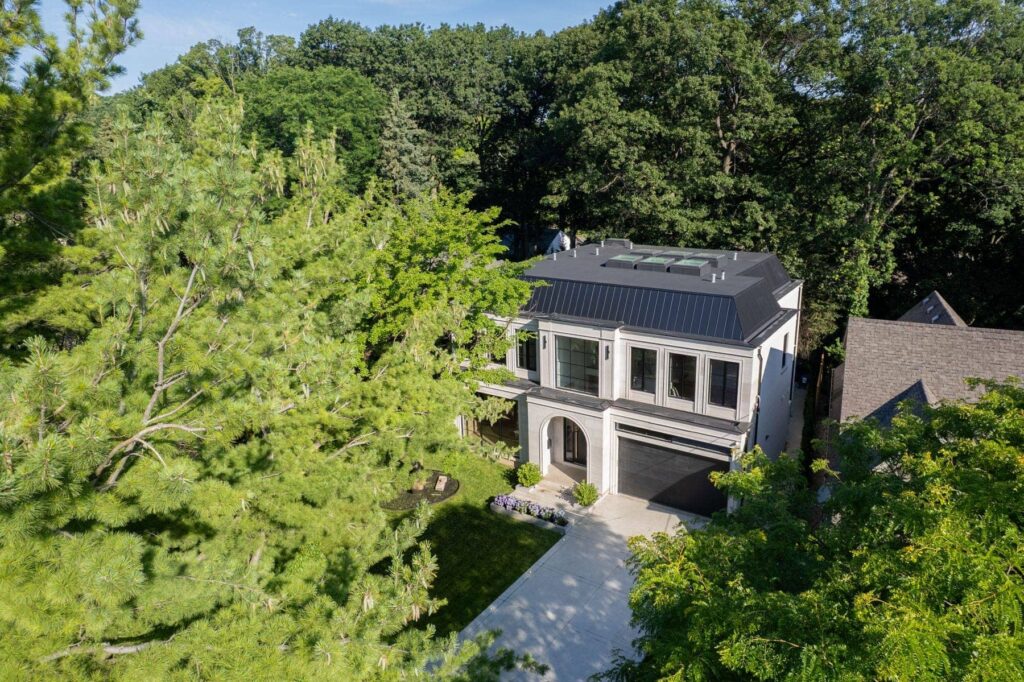
Industrial elements, for example metal roofs and concrete blocks, pictured here, as well as others not pictured like vertical siding and grid railing, are often used for the exterior of transitional homes. These elements, when combined with an otherwise classic-looking house, help to add more of a modern touch in order to create an updated, balanced, and timeless appearance.
Contrasting Colors
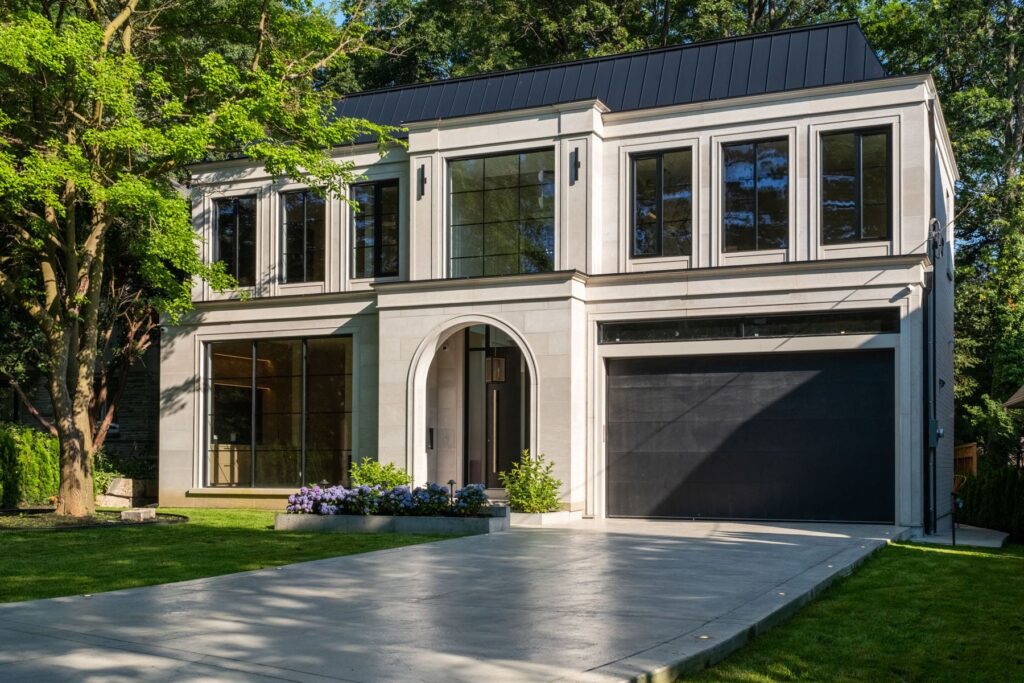
Contrasting colors for the exterior, which typically means dark roofs and light walls as shown here, add depth and definition to a house for an increasingly timeless look. This kind of contrast also helps draw the eye to different areas of the house, making it appear more dynamic instead of plain or flat as it could be with the use of similar or the same colors.
Large Glass Windows
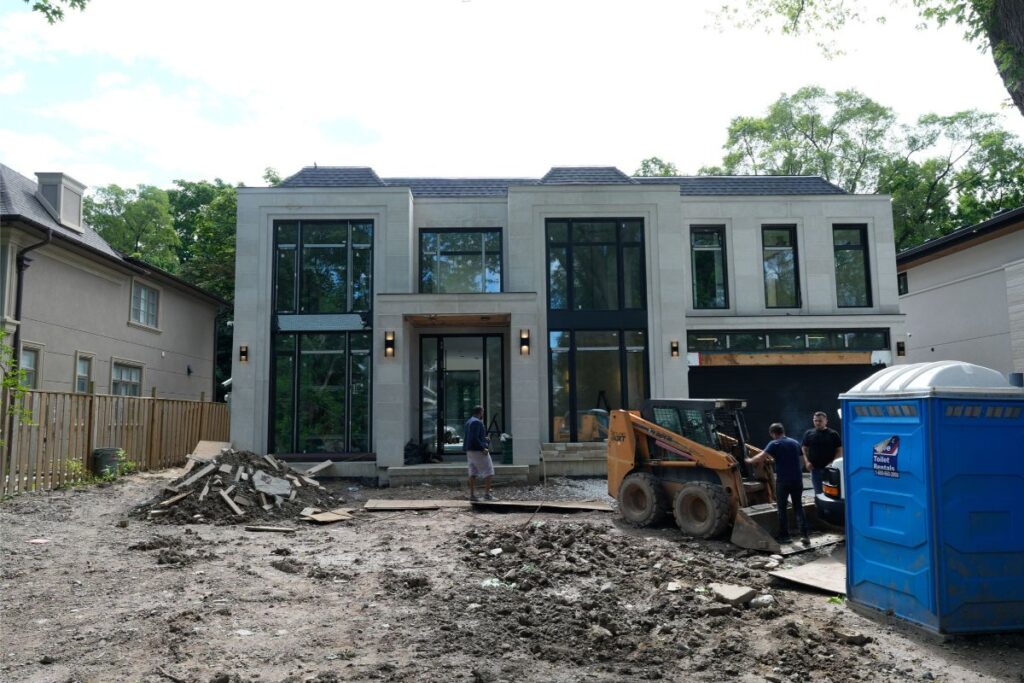
Large glass windows are a very common feature of transitional homes. Sometimes symmetrical and sometimes not, these windows add another modern touch and allow for lots of natural light to enter the home. This makes for a brighter, more open space, one that is exceptionally inviting for guests and very comfortable for you and the members of your household.
Horizontal Awnings
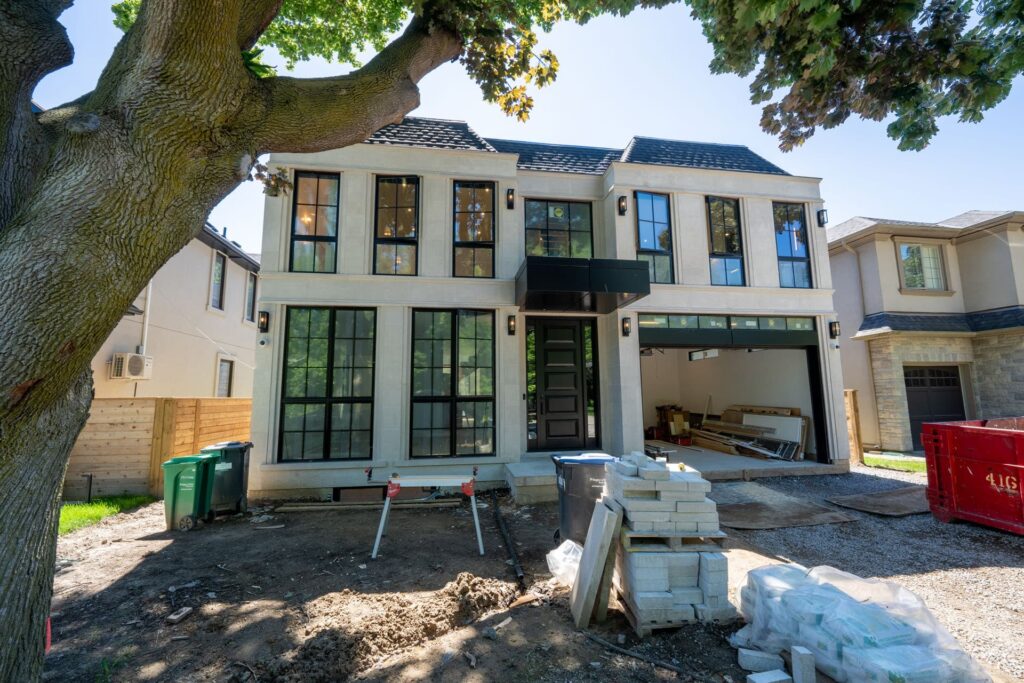
Horizontal awnings add one more modern touch to transitional home design for an increased mix of contemporary and classic visuals. It is another component that draws the eye, standing out from the rest of the house and providing excellent cover for the porch, which will surely come in handy during rainy weather conditions.
Transitional Interior Design Characteristics
Now that we have discussed a few design elements specific to transitional exteriors, let’s take a closer look at some transitional style interior design characteristics and precisely what they entail:
Combination of Design Styles
The element that truly sets transitional design apart from other types of design is its combination of different styles. As long as everything is complementary, furniture, fixtures, and decorations can all come from any period of design, whether it be Victorian, art deco, mid-century modern, or any other style you can think of and would want to incorporate.
Neutral Color Palette
Transitional interiors usually use a neutral color palette, including white, cream, taupe, beige, grey, and tan, as a base for each room in the house. This is because these colors work well with pretty much everything, so no matter what furnishings you choose, every room will look visually cohesive and balanced.
Often, this neutral base is paired with darker, earthy tones like brown, green, and blue for a nice little bit of contrast as these pops of color draw the eye and help freshen up a space. Colors other than the earthy tones already outlined can also be used as separate accents, but only if they do not dominate the room.
Combination of Textures
On top of combining design styles as a whole, combining a variety of textures and materials within individual rooms is also a unique element of transitional decor.
Mixing wood, glass, metal, fabrics, and any other materials together, once again as long as it is all complementary and cohesive, can add a modern touch to a room, as well as what some might find a surprising amount of sophistication. In a living or dining room with wood floors, for example, furnishings upholstered with fabric can help to create a warm atmosphere.
Simple Shapes and Lines
Do away with any furnishings that are too ornate or elaborate and just keep things simple.
Transitional interior design is all about simplicity in its shapes and lines, sticking to straight lines instead of curved and rectangular shapes instead of circular. So while there may seem to be a lot going on in regard to the mixing of different styles, materials, and textures in different rooms, that is not the case for the decor as a whole. Simplicity is, in fact, highly regarded in transitional designs.
Minimal Accessories
In maintaining the sense of simplicity previously discussed, clutter should also be avoided and accessories should be kept to a minimum in any given room. Antiques and one-of-a-kind pieces fit well within a transitional home, so it is a good idea to use one or two of these accessories as decorations in a room, but always make sure to keep it neat and tidy.
Comfortable Touches
Luxurious and comfy touches that you might find in a lounge or hotel room, such as a club chair, stylish or playful wallpaper, and layered textiles, are also elements indicative of transitional design. This specific feature is sometimes referred to as a hospitality design influence.
The point is to create a space that you can relax in, one that is truly comfortable and enjoyable to spend time in, and where you can feel the most at home.
Artwork as a Focal Point
If you choose to include artwork, whether a painting or any other framed piece of art, in the decor of a room, it should be a statement piece and subsequently the focal point of the room, used to highlight the other furnishings and overall aesthetic of the space. To draw in the eye and create an impact, the artwork should typically have vivid, bold colors for a more dramatic effect.
Statement Lighting
Using a statement lighting fixture as a room’s centerpiece, such as a chandelier, pendant lighting, or even a floor lamp, is also rather typical of transitional interior design. Most of the time, this kind of lighting fixture will have a modern look in order to bring a more contemporary style to the space, especially if your home has an otherwise traditional look to it.
Interior Design Tips to Create a Transitional Style House
There are many ways that you can bring a transitional aesthetic into your house on your own. The following are some interior design tips to help you do just that:
Mix and Match Colors
Even just the slightest mismatch of colors or finishes can go a long way.
When looking at paint swatches, instead of only going up or down a chip, try going one or two chips over in the deck for something that is a different hue than your original choice of color. In this way, you will be able to find colors that still work well together, even though they aren’t part of a matching set, allowing for a more dynamic look to your home.
Try Out a Fun Wallpaper
You can add different textures to your space with stylish or playful, fun wallpaper, which can elevate the look of a room while helping to create more of a transitional interior. There are many peel-and-stick wallpaper options out there that make DIY application easy, with a wide variety of textures, patterns, colors and graphics to choose from.
Install Pendant Lighting
Since statement lighting is a key characteristic of transitional style decor, installing pendant lighting in your dining room over the table is a sure-fire way to bring this design aesthetic into your home. For a budget-friendly option, you could also consider installing a plug-in lamp and simply concealing the cord along the wall or ceiling with an adhesive and paintable cord cover.
Invest in Window Treatments
From a simple linen to light sheer to luxe velvet and so much more, there is no end to the options for window shades or drapes that you can choose to get for your home. No matter what specific shade or drape you decide on, the important thing is to invest in overall chic window treatments that will help complement your decor and provide the space with a finished look.
Focus on Comfort
Your home being comfortable is arguably the most important aspect of any type of design style, but particularly for transitional design.
Make sure to focus on your own comfort by including at least one cozy seat in any furniture grouping in your home. Adding anything else that feels luxe or cozy to different rooms is also a good idea; for instance, you could put an ultra soft throw blanket on the couch in your living room.
Add Personal Touches
Your home shouldn’t look or feel like something out of a stock catalog; it should be lived in, so don’t be afraid or forget to add your own personal touches. This is what will make your space feel like it is truly yours.
Include family heirlooms, antiques, or artwork that you simply enjoy and play around with any number of different accessories until you find what you like best and what makes you the most comfortable and happy.
Final Thoughts
Transitional design is all about blending traditional and modern aesthetics.
Many key characteristics that set it apart from other design styles are things such as mixing and matching colors, textures, and materials, using simple shapes and lines, having minimal accessories, statement lighting, and an overall neutral color palette. However, the ultimate goal of this style is to create a comfortable, cohesive, and timeless space.
At NICKS Development, whether you are looking to build your own custom home or just get renovations done, our team is committed to creating a space that has the transitional design you want for you and your family to enjoy.
Contact us today for more information about our services and to receive a free quote!
FAQs
Yes, transitional style is a very popular design choice in today’s day and age. People tend to gravitate toward it because of how well it mixes traditional and modern aesthetics and how it really just allows you to do whatever you want so long as it is cohesive and comfortable.
Absolutely! Transitional and farmhouse styles actually share some of the same design elements, including a general combination of new and old, neutral color palettes, and clean lines, which makes it quite easy to mix the two together. As for other types of design, since transitional is already based on the combination of design styles, mixing anything else with it should be just as easy.
An advantage of transitional style is that it produces a timeless aesthetic that remains versatile. There are so many ways that you can combine various styles and aesthetics while still maintaining a cohesive and comfortable look and feel. However, a disadvantage is that it can sometimes lack character, appearing too basic or run of the mill, especially as it toes the line between traditional and modern. This is why adding your own personal touches to the main elements of the design style is so important, both to differentiate it from other similar houses and to make it truly your own.